
Low-fat content is killing your brand in search
SEO content has gone low-fat – technically correct, utterly unsatisfying. Bethany Plint, Copy Director at Wonderthink, argues for a return to rich, full-fat storytelling that builds brands and gets people talking.
SIGN UP FOR OUR NEWSLETTER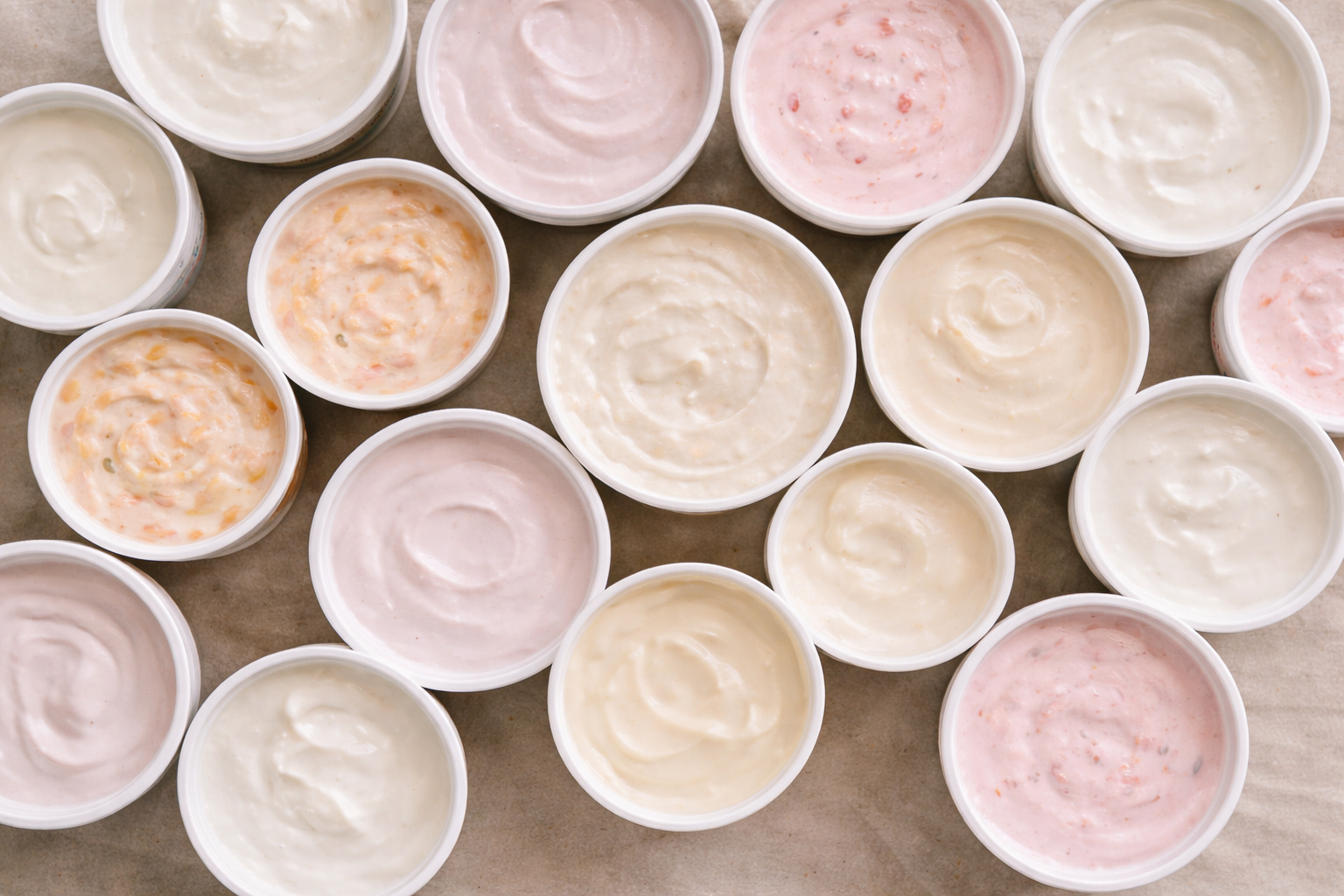
Next time you’re at the supermarket, walk down the dairy aisle and count the number of yoghurt variations. It’s kind of absurd.
There’s the original, of course – full fat, full flavour, eat-it-directly-from-the-tub stuff. And then there are the copycats. Low fat, half fat, high protein, low sugar and whatever the hell YoPro is.
If you’re thinking, wow, she’s really worked up over low-fat yoghurt, understand this.
I’m a millennial of the “nothing tastes as good as skinny feels” era, so I’m painfully familiar with the yoghurts that don’t even meet the caloric needs of a newborn baby. And please don’t get me started on cottage cheese – my keyboard can’t handle the furious typing that would ensue if we went down that rabbit hole.
In addition to being a victim of 2000s heroin chic diet culture, I’m also a writer who has seen the pendulum swing back and forth across the content spectrum.
Like yoghurt, I believe content is best served in its purest state. A good idea, fleshed out in all its glory. Not stripped for parts and put together again with a bunch of filler that ticks the boxes.
That’s what a lot of SEO content is these days. Thin content. It’s low-fat and stuffed with ingredients that have no business being there. It looks like it should do the job – the keywords are there, the structure looks right – but it lacks depth; lacks substance. It doesn’t satisfy.
Great content, on the other hand, is full-fat. It’s rich with detail, insight and narrative voice. It doesn’t just answer the question, but it does the work to explain it, connect it to the context, and leaves you feeling like you actually get it.
This depth is what humans crave. A hearty, satisfying story.
And you know who’s really bad at telling good stories? Bingo. AI.
Not because it’s incapable, but because it’s trained on a whole heap of pretty average content. When everything is optimised to follow the same rules, you don’t get standout stories. You get more of the same.
Tricks, tactics and the optimisation trap
Since SEO was born in the mid-1990s, SEOs have been optimising the bejeezers out of our content. In print or offline media, you could let your freak flag fly – tell the best stories, lean into the narrative. But on the web? There were boxes to tick and little-endorsed but often rewarded tricks we’d use to be seen.
Early on during the wild west years of SEO manipulation, bad players were hiding words like “porn” and “sex” in backend code in order to appear in Google. Up until 2003, it was keyword stuffing – cramming strange phrasing unnaturally into a sentence – until Google’s Florida update cracked down on it.
In 2011, we regained our marbles for a moment when the Panda update told us that originality was crucial and any duplicate content would be sent to the Google graveyard (i.e. page 2).
And so, we adjusted course, writing helpful content with interesting perspectives and thorough research. We did our homework and found the topics and phrases our audiences were searching for. And, for the most part, we were successful. Traffic gains, keyword position improvements and increased organic traffic value were the theme of almost every monthly report.
And then the world seemed to tilt on its axis. LLMs were launched to the public and, over the last few years, have slowly bubbled up to a boiling point where ‘Answer Engines’ are all anyone can talk about.
As a community of content, SEO and marketing folks, we’ve been trying to (and mostly failing) maintain performance as the ground shifts beneath us. Experts have come out with ’12-point GEO strategies’ and ‘5 tactics to win LLM traffic’ – and while there is merit in some of their recommendations, we’re falling into the same trap that SEO has been stuck in for decades. Tactical, stop-gap techniques to tick the box and hope for the best.
But what if there’s a better way to win people over?
Branding and SEO? Full-fat storytelling at its best
At an SEO conference in Sydney a few weeks ago, Jes Sholz – absolute weapon of an SEO as well as a top-tier storyteller – reminded us of the importance of a little thing called brand.
She dared to suggest that the key to good organic performance may not be SEO, but in fact, building an amazing brand. One people know and love before they even think about buying something, and then search for directly when they drop further down the sales funnel.
In a room full of SEO bros, you can imagine how this went down. But in my mind, I thought, “Yes, exactly.”
According to Les Binet & Peter Field, the grand daddies of marketing effectiveness, 60% of your marketing budget should be spent on brand activity – stuff that’s memorable and distinct. Stuff that tells a great story. In practice, we know this isn’t happening. And for some brands, trying to get to 60% may feel like a battle lost before you’ve even taken to the field. But 40%? Even 30%? That’s doable.
Then, the question becomes: how can we best use this additional investment? Spoiler – it’s probably not through volume, but rather a single, delicious scoop of full-fat storytelling.
We’re leading a storytelling revival. Wanna join?
A client of ours in the luxury accommodation space recently came to us for a content strategy. Given their distinctive, premium positioning, SEO blogs evangelising volume trends weren’t going to cut it. They needed to go all in. Full fat. Uncover and tease out the stories that would draw people into the brand, not just onto the website.
Our recommendation included a distinct focus on human-led content. True storytelling. Artfully crafted content with beautiful language and genuinely unique perspectives, supported by visually striking content design. For the client, it was an easy ‘yes’.
Because with this kind of content, instead of fleeting clicks from people skimming for answers, you attract an audience willing to spend time, engage deeply and actually imagine themselves in your world. The kind of audience more likely to enquire, book and come back again.
How brand SEO is showing up in search today
AI is not quite as intelligent as the Sam Altman’s of the world would have us believe – it still struggles with basic maths.
But it is getting smarter.
It’s starting to favour the same things humans do: brands it recognises, trusts and sees referenced often.
Google has baked authority into its algorithm for years. Now LLMs are doubling down, prioritising content from brands that are widely shared and talked about. An analysis from Ahrefs recently found that branded web mentions show the strongest correlation with AI Overview brand visibility. In other words, the more people are talking about your brand online – on social media, forums or online news platforms – the better your chances of appearing in AI-powered search.
And nothing gets people talking like a good, juicy story.
Is there a place for uninspired, low-fat content?
There is a place for low-fat yoghurt. And, I suppose, low-fat content.
But if your entire strategy is built on low-fat thinking – on ticking boxes, chasing the new ‘best practice’ and shaving ideas down to fit a formula – you may get surfaced, maybe even cited. But you probably won’t be remembered.
The brands that will shine – now and in whatever the next version of search looks like – are the ones willing to go full fat.
Rich ideas. Deliciously distinct voices. Stories that really satisfy.
If you’re wondering what that looks like in your industry, reach out. Get in touch here or email [email protected].
You may also like

Low-fat content is killing your brand in search
SEO content has gone low-fat – technically correct, utterly unsatisfying.
READ MORE
How education providers can compete in search
You don’t need to have a huge budget to make a splash in search.
READ MORE